


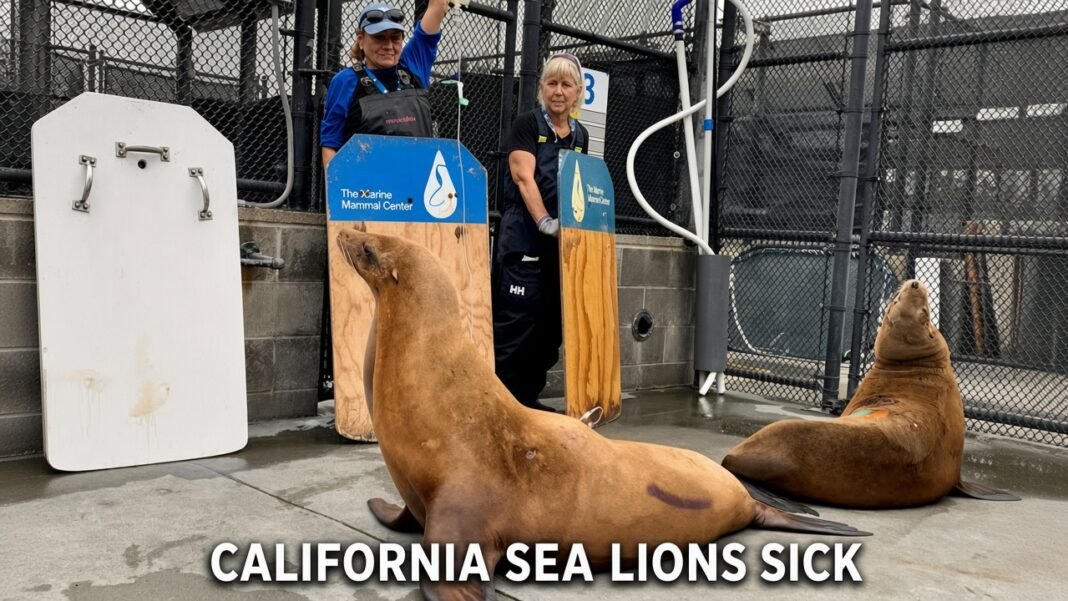
People visiting California beaches are being urged to keep their distance from sick sea lions as cases of California sea lion poisoning continue to rise along the coast.
The animals are becoming sick from domoic acid, a toxin produced by certain types of algae. The toxin can affect the nervous system and cause serious symptoms in sea lions, including confusion, twitching, tremors and seizures.
According to the Marine Mammal Center, more than 100 domoic acid poisoning cases have already been reported along California’s coastline in 2026. In a typical year, the organization sees about 70 to 90 cases.
Sick Sea Lions Reported in California
The recent increase in cases has been especially serious in Monterey and Santa Cruz counties.
Giancarlo Rulli, a spokesperson for the Marine Mammal Center, said the number of cases began increasing in early summer. The situation became more severe over the past week in parts of the coast.
More: California Wildfire Utility Bill Moves Forward as Lawmakers Push for More Accountability
The pattern has also been difficult to predict. Cases can increase, slow down and then return again, making it hard for wildlife teams to know where the next hotspot will appear.
The Monterey Peninsula is currently one of the main areas of concern, but officials say the situation could change as conditions along the coast change.
How Do Sea Lions Get the Toxin?
Sea lions can be exposed to domoic acid when they eat contaminated fish.
Small fish such as sardines and anchovies can carry the toxin after feeding in areas affected by harmful algal blooms. Sea lions then consume those fish and take the toxin into their bodies.
The toxin can cause serious neurological problems. An affected sea lion may appear tired, confused or unable to control its movements.
Some animals may bob their heads, twitch or experience tremors and seizures.
Repeated exposure can also cause more serious and lasting effects, including permanent brain damage.
Ocean Conditions May Play a Role
Experts say ocean conditions can help harmful algae grow.
Wind-driven upwelling can bring nutrients from deeper water toward the surface. Those nutrients can support the growth of algae. Warmer ocean temperatures can also help some algal blooms multiply.
However, domoic acid is not limited to warm water. The toxin can also form during colder conditions and move through the food chain when contaminated fish are eaten by marine animals.
This makes the current California sea lion poisoning situation particularly difficult to predict.
Officials Warn Beachgoers | California Sea Lion Poisoning
Wildlife officials are asking people not to approach sick sea lions.
NOAA spokesperson Michael Milstein said affected animals can be dangerous and unpredictable. Beachgoers are advised to stay at least 100 yards away from sick or stranded sea lions.
People should also avoid gathering around an animal that appears to be ill. Crowds can add stress to an already sick animal.
If a sea lion is showing unusual behavior, people should contact wildlife authorities instead of attempting to touch, move or feed it.
What Signs Should People Watch For?
A sick sea lion may not always look obviously injured.
Some warning signs can include:
- Disorientation
- Extreme tiredness
- Head bobbing
- Twitching
- Tremors
- Seizure-like movements
- Unusual or erratic behavior
If beachgoers notice these signs, they should keep their distance and report the animal.
Stranded sea lions along the West Coast can be reported to NOAA at 866-767-6114.
The Marine Mammal Center can also be contacted at 415-289-7325 for sea lions found along the California coast from Mendocino County through San Luis Obispo County.
Rescue Teams Face Difficult Work
Helping sick sea lions can be physically demanding.
Many of the affected animals are adults weighing between 150 and 300 pounds. Moving one animal from a beach can require four to six volunteers and a large metal crate.
The work can also be emotionally difficult. Watching a normally active marine animal struggle with seizure-like behavior can be upsetting for rescuers and beach visitors.
The Marine Mammal Center says volunteers can help as its teams deal with the growing number of cases.
This Is Not California’s First Sea Lion Outbreak
California has experienced other serious health problems affecting sea lions in recent years.
In 2023, an outbreak of leptospirosis killed sea lions along parts of the coast. Earlier in 2026, a strain of avian flu also caused an outbreak among marine mammals.
The current California sea lion poisoning cases are raising concern because more than 100 cases have already been reported this year.
What Beachgoers Should Do | California Sea Lion Poisoning
For people visiting California beaches, officials have a simple message: keep a safe distance from sick or stranded sea lions.
Do not try to touch or move the animal. Do not crowd it for photos or videos. Instead, report the animal to trained wildlife responders.
The situation may change as ocean conditions and algal activity change. Wildlife organizations and officials will continue monitoring the coast and responding to affected animals.
For now, staying away and reporting unusual behavior is one of the safest ways beachgoers can help both themselves and the animals.



[…] California Sea Lion Poisoning Cases Rise Along the California Coast […]